Instead of chasing “the single best smartphone” — a question that doesn’t really make sense, since the right phone depends on how you use it — we picked the best one for each use case: heavy phone-based work, photography, a compact form factor, maximum power, gaming, and best zoom.
Flagship with no compromises: OPPO Find X9 Ultra
For anyone unwilling to compromise on anything, the OPPO Find X9 Ultra offers the most complete package: a Hasselblad camera system with periscope zoom, Snapdragon 8 Elite paired with up to 16 GB of RAM, a 2K AMOLED display at 120 Hz, and blazing-fast charging both wired (100W) and wireless (50W). The price is consistently high and availability in Western markets remains limited, but for anyone who wants the absolute best with no trade-offs, it remains one of the references of 2026.

The most complete and solid: HONOR Magic8 Pro
If you’re looking for a phone that does everything well with no obvious weak spot, the HONOR Magic8 Pro is the most balanced choice: an OLED display peaking at 6000 nits, a large battery with very fast charging, and the toughest IP69K rating in its class. Its 200 MP telephoto lens with 3.7x optical zoom is particularly effective at night.

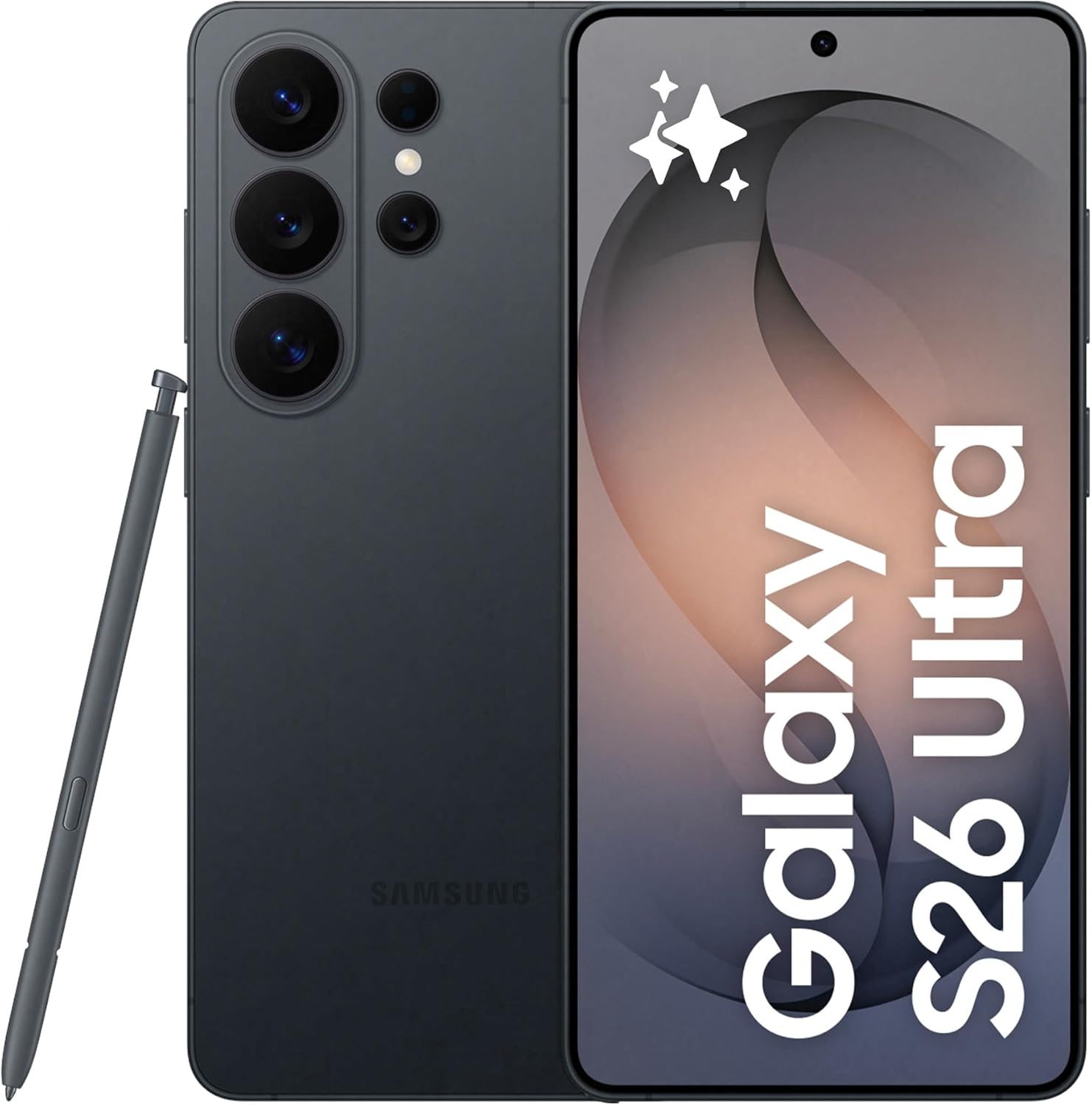
Best for productivity: Samsung Galaxy S26 Ultra
Anyone who uses their phone as a work tool should look at the Galaxy S26 Ultra: the included S Pen remains unrivaled on the market, the privacy display protects sensitive documents in public places, and the three-year manufacturer warranty is no small detail for anyone treating their phone as a long-term investment.
Best for photography: vivo X300 Pro
On pure photography, the vivo X300 Pro stands out with its ZEISS system featuring a 200 MP APO telephoto lens and a Sony LYT-828 main sensor with gimbal-grade stabilization. An optional ZEISS teleconverter is also available, pushing the zoom beyond 200mm equivalent. The only trade-off is a smaller battery in the European version compared to the Chinese one.

The best compact: Google Pixel 10
For anyone who isn’t a fan of oversized phones, the Google Pixel 10 remains one of the few solid flagship-tier options: a 6.3” display, an efficient Tensor G5 chip (+34% performance over its predecessor), and seven years of guaranteed software updates — the longest support commitment on the Android market.

The most powerful: Apple iPhone 17 Pro Max
For anyone who simply wants maximum performance without overthinking it, the iPhone 17 Pro Max remains the reference: an A19 Pro chip with a vapor chamber for sustained performance, a display peaking at 3000 nits, and battery life reaching up to 39 hours of video playback. The price is among the highest in its class, and its size isn’t for everyone.

Best entry-level gaming pick: POCO X7 Pro
Anyone who wants to game without spending a fortune will find a true flagship-killer in the POCO X7 Pro: the MediaTek Dimensity 8400-Ultra chip scores over 1.7 million points on AnTuTu, the 6000 mAh battery fully charges in 42 minutes, and the 120 Hz AMOLED display is protected by Gorilla Glass 7i. It lacks wireless charging and doesn’t include a charger in the box, but for the price it’s hard to beat.

Ideal for gaming: REDMAGIC 11S Pro
For anyone who wants maximum gaming performance with zero compromises, the REDMAGIC 11S Pro bets everything on technical dominance: AquaCore liquid cooling with an extended vapor chamber and a fan spinning up to 24,000 RPM, a hole-free, notch-free 144 Hz display, and a Snapdragon 8 Elite Gen 5 chip boosted by a dedicated RedCore R4 chip. The design isn’t for anyone seeking discretion, and cameras remain a secondary concern compared to premium camera phones.

Best for zoom and video: Xiaomi 17 Ultra
Anyone chasing the best zoom around should look at the Xiaomi 17 Ultra: a Leica telephoto lens with 75-100mm equivalent mechanical optical zoom, and video capabilities reaching up to 8K with Dolby Vision and LOG mode for professional editing. It’s a phone explicitly built for anyone who won’t settle for a standard camera.

How to actually choose
There’s no smartphone that’s perfect for everyone, but there are choices that make a lot more sense than others depending on how you’ll use it. Start from three priorities: software ecosystem, battery life, and cameras. If you work a lot from your phone, prioritize software support and cross-device continuity; if you shoot photos often, prioritize sensors, zoom, and processing quality; if you game, focus mainly on cooling, display, and battery. The best model is the one that best fits your everyday use, not the one with the flashiest spec sheet.