Around 500 euros, the smartphone market is arguably the most competitive segment of the year: it’s where manufacturers try to cram in as many specs as possible without crossing into flagship pricing, which also makes it the segment where the differences between models stand out the most. We compared five contenders in this bracket — Realme 16 Pro Plus, Redmi Note 15 Pro Plus, Motorola Edge 70, Nothing Phone (4a) Pro, and Google Pixel 10A — focusing on what actually matters day to day: battery life, cameras, build quality, and software.
Realme 16 Pro Plus: the best balance of battery and camera
The Realme 16 Pro Plus stands out for two things in particular: its 7000 mAh silicon-carbon battery with 80W charging, which leaves plenty of charge left by the end of the day, and a camera system that includes an optical zoom — rare at this price point — capable of reaching 25x digital zoom with surprisingly clean results. Its AI-powered photo editing is also worth noting: it lets you edit a shot with a simple text prompt instead of manually cutting out subjects. A 144 Hz display and IP69K rating (it even survives hot water) round out a solid package. The one real weak spot is an imprecise haptic motor, with vibration that leaves a slight, noticeable “tail.”

Redmi Note 15 Pro Plus: plenty of storage, but the weakest of the group
On paper the Redmi Note 15 Pro Plus starts strong: 12 GB of RAM and 512 GB of storage are the most generous in the comparison, and its 100W charging is the fastest of the five. In practice, though, it’s the phone that impresses the least: its UFS 2.2 storage is slower than the UFS 3.1 found on every other competitor, a detail that shows up in more demanding apps, and the software is still stuck on Android 15 with HyperOS 2.0, while other Xiaomi phones have already moved to the newer version. On the plus side, the audio has punchy bass and the 200 MP main camera performs well.

Motorola Edge 70: the best value, and the slimmest
The Motorola Edge 70 plays a different game: launched at a list price of 799 euros, it’s now often found around 479 euros — a price drop that arguably makes it the smartest buy of the five for anyone without specific requirements. It stands out above all for its 6 mm thickness and 159-gram weight, the most manageable of the bunch, without giving up too much: it still has wireless charging, rare at this price, and a 4800 mAh battery that, thanks to the efficiency of its silicon-carbon tech, gets through a full day despite having the smallest capacity in the group.

Nothing Phone (4a) Pro: the most original, with some trade-offs
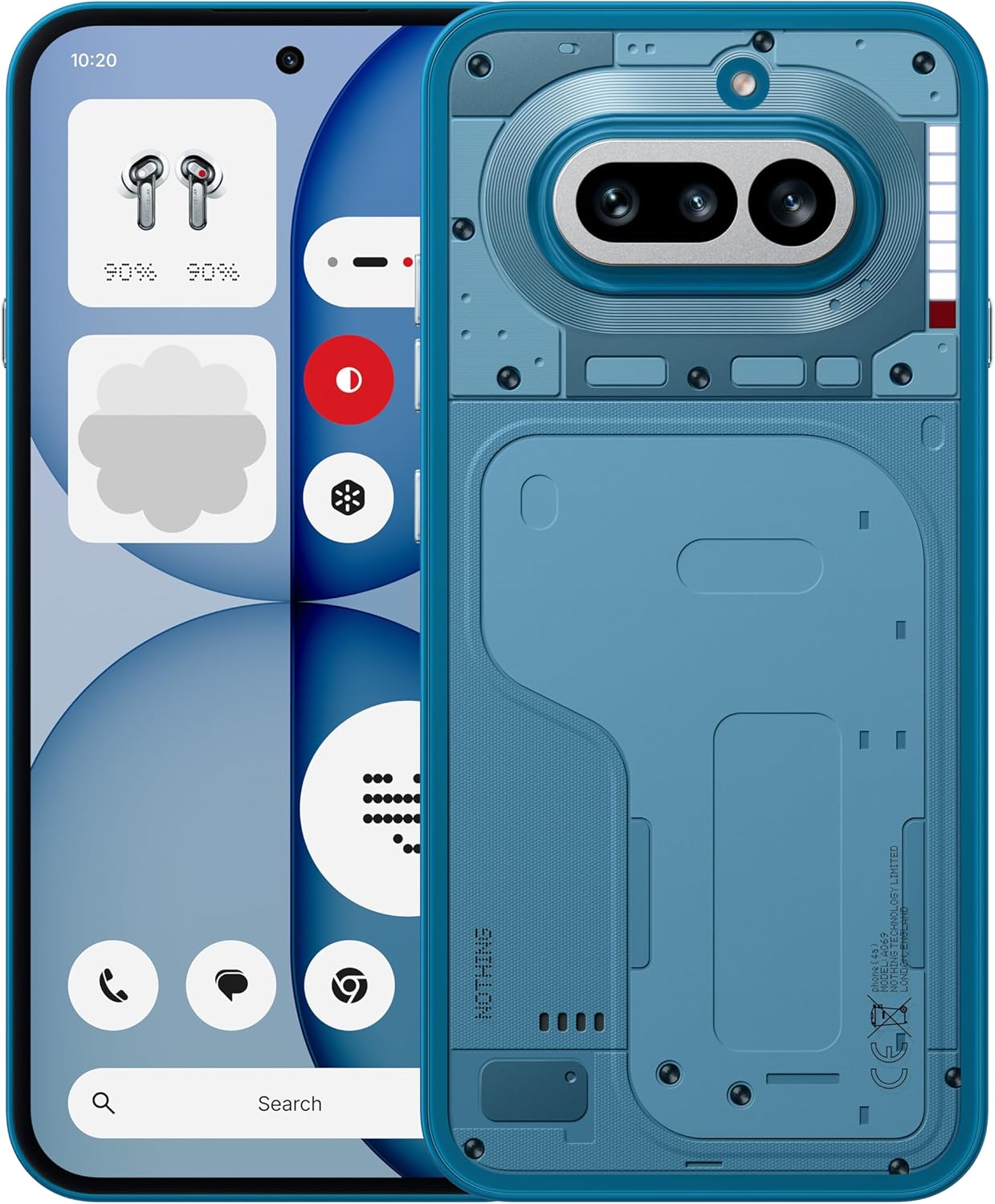
The Nothing Phone (4a) Pro is the one that stands out the most at a glance: an all-aluminum unibody build (the only one in the comparison), a rear Glyph Bar that can display notifications or information, and software — Nothing OS — among the cleanest and smoothest you’ll find on Android, with very little preinstalled bloat. Its 144 Hz display is among the best of the group, and it also features optical zoom. The flip side is an IP65 rating, the lowest of the five (versus IP68/IP69K on its rivals), and a telephoto lens that’s actually a step down from the previous-generation Phone (3a) Pro. It’s the kind of distinctive design people tend to either love or leave on the shelf.
Google Pixel 10A: the best display and the most polished software
The Pixel 10A is the most compact of the group (6.3” versus over 6.8” on the others) and carries the brightest display, peaking at 2000 nits. Its haptics are arguably the best in the whole comparison — precise, strong, with no “tail” — and the software enjoys the longest support on the Android market: seven years of updates, plus Gemini integration. The real limitation is the Tensor G4 chip, power-hungry and not always as responsive as the competition, which shows up as weaker battery life than the other four: by the end of the day it’s the one with the least charge left. Charging, both wired and wireless, is also slower than average.

Conclusion
There’s no single outright winner: the right choice depends on what matters most to you. If you want the best balance between battery life and camera, look at the Realme 16 Pro Plus; if you want to spend as little as possible without too many compromises, the Motorola Edge 70 is the pick; if display quality and software longevity are your priority, go for the Google Pixel 10A; if you want a design that stands out from the crowd, choose the Nothing Phone (4a) Pro. The Redmi Note 15 Pro Plus, despite its generous storage, is the one that impresses the least in a head-to-head comparison.