Have you realized your smartphone, however good, just isn’t cutting it anymore? You want to make the jump to a real camera, but between compacts, bridge cameras, mirrorless, DSLRs, every sensor size imaginable, and naming schemes that seem designed to confuse you, you have no idea where to start. Don’t panic: a few well-chosen questions are enough to narrow the field down to a handful of models genuinely right for you.
First things first: do you actually need a camera?
It’s a provocative question, but a fair one. A modern smartphone takes excellent photos for social media, family memories, and everyday use. A dedicated camera only makes sense if you want a real step up: true zoom without losing detail, more creative control over depth of field, more consistent results in difficult lighting, or simply the pleasure of a device built solely for taking photos. If what you need is “photos like my smartphone’s, but with a second device,” that money is probably better spent on a more capable phone.
The four types of camera
Point-and-shoot compacts are built for absolute simplicity: no lens to swap, automatic modes that handle everything, a light body. Bridge cameras look like a DSLR on the outside but also have a fixed lens, often with a very extended zoom (sometimes beyond 60x): the right choice if you want to cover wide-angle to telephoto without carrying multiple lenses. Mirrorless cameras have now overtaken DSLRs in nearly every respect — autofocus, video, weight — and are the reference standard for anyone who wants interchangeable lenses. DSLRs remain valid, especially on the used market at good prices, but manufacturers have all but stopped developing new models, so the future of the system (new lenses, updates) now lies almost entirely with mirrorless.
The sensor matters more than you’d think
The sensor is what captures light and determines much of the final image quality. In ascending order of size — and generally, quality and price — you go from sub-1-inch sensors in budget compacts, to the 1-inch format in premium compacts, to Micro Four Thirds (compactness and light weight without too many compromises), to APS-C (the most recommended balance for starting out with a mirrorless), up to full frame, which offers maximum quality but requires a significant investment — starting at around €1,000 body-only.
Don’t be fooled by megapixels: they matter less than marketing suggests. A modern 12 MP full-frame sensor can produce better files than a small 200 MP sensor. Megapixels only become a relevant factor when comparing sensors of the same size.
Fixed or interchangeable lens?
Fixed-lens cameras (compacts and bridge cameras) require no maintenance and no ongoing costs, but their versatility stops wherever the manufacturer left it. Mirrorless and DSLR cameras, with interchangeable lenses, let you build a kit tailored to your needs — wide-angle for landscapes, telephoto for sports, macro for close-ups — but it’s worth knowing upfront that the real investment over time is the lenses, more than the body.
Autofocus, burst rate, and video: what to check based on use
If you mostly photograph still subjects — landscapes, still life, posed portraits — autofocus and burst rate matter relatively little. But if you’re chasing kids, animals, or sports, autofocus tracking quality (especially eye detection) and burst shooting speed become the most important criteria, often more so than resolution itself. For video, check maximum resolution (4K is now the baseline), high frame rates if slow motion matters to you, reliable continuous autofocus, and — if you film yourself — a screen that flips toward the lens.
New or used?
The used camera market is solid, transparent, and good value: many models manufacturers consider “outdated” remain excellent tools at a fraction of their launch price. If you’re just starting out, buying used lets you discover what you actually need before investing in a new system — advice that especially applies if you’re not yet sure whether photography will become a lasting passion or a passing interest.
A few cameras to get you oriented
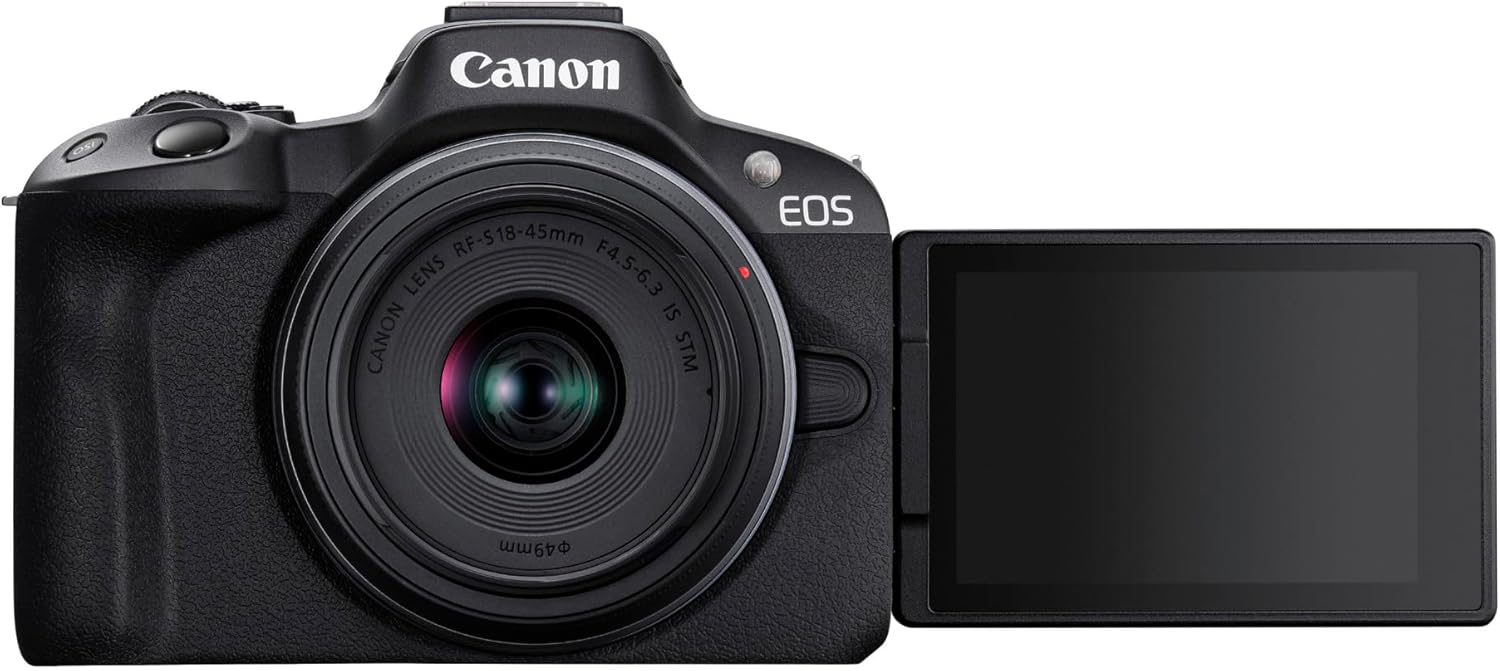
The Canon EOS R50 is arguably the best entry point into mirrorless today: extremely light, with the same sensor as higher-end models and very reliable autofocus.

The Nikon Z50 II shares its autofocus with Nikon’s flagship cameras and is often bundled with a lens for under €1,000: a great starting point for anyone staying in the Nikon system.

The Sony A7 IV remains the most recommended full-frame all-rounder for anyone wanting to step up without compromises, in both photo and video.

For anyone after the best in a pocketable format, the Sony RX100 VII pairs a 1-inch sensor with a 24-200mm zoom and top-tier autofocus.

The OM System OM-3 is the right choice if you want a compact mirrorless camera, weather-sealed and built for travel and nature.
In summary
Always start from “what do I need it for,” not the most heavily advertised brand. To get started, an APS-C mirrorless remains the most balanced choice; if you already know you’ll shoot sports or wildlife, prioritize autofocus and burst rate over the sensor itself; if video is the priority, check resolution, frame rate, and a flip screen. And don’t rule out the used market — it’s often the smartest way to get started.