Anyone who asks for advice on which smartphone to buy always gets the same answer: there’s no single best phone. It all depends on your budget, your actual needs, and to some extent your taste. This guide won’t tell you “buy this one” — it will give you the tools to evaluate any smartphone you come across, at any price point.
What you actually need it for
Before you even look at a spec sheet, it’s worth pausing on how you’ll actually use the phone. For browsing, messaging, and social media, a mid-range model is more than enough. If the smartphone is also your work tool, or you rely on it for multitasking, the processor, RAM, and how many years of software support the manufacturer guarantees matter more. Anyone working on a job site or into extreme sports should look at so-called rugged phones: bulkier and less polished in design, but built specifically to survive drops, impacts, and extreme temperatures, with batteries that last longer too. Finally, there are models built for people who want simplicity: larger physical buttons, simplified menus, and a dedicated emergency button.
One last category worth a separate mention: foldable phones. They shrink their footprint by folding in on themselves, but they remain a niche product, generally more fragile, and still priced well above traditional models.
Display
The first thing you notice about a phone is its screen, but evaluating it well means looking past sheer size. Panel technology makes a huge difference: AMOLED and OLED displays offer deep blacks and vivid colors because individual pixels can switch off, while LCD IPS panels, now rare on recent models, still deliver decent quality at a lower cost — a notch below those sit LCD TFT panels, typically found only on entry-level models, with less natural colors and higher power draw. A 120 Hz refresh rate has become the standard in 2026: a phone still stuck at 60 Hz is noticeable, especially when scrolling. Finally, peak brightness (measured in nits) determines how readable the screen stays under direct sunlight.
There’s one technical detail few people check but that’s worth looking into if you stream a lot of movies and shows: support for Widevine L1 DRM. Without this certification, apps like Netflix, Prime Video, or Disney+ will still work, but they’ll cap playback at low resolution (SD) even on a panel capable of much more — a silent limitation worth ruling out before buying, especially on lesser-known brands.
Processor and RAM
The processor determines how responsive a phone feels today, but RAM determines how long that responsiveness lasts. The main manufacturers are Qualcomm (Snapdragon), MediaTek (Dimensity), Apple (in-house chips), and Google (Tensor): the specific name matters less than the tier it belongs to. For smooth everyday use, don’t go below 6-8 GB of RAM; anyone who wants their phone to avoid slowing down after two years of updates should aim for 12 GB, now standard on upper-mid-range models. Where the spec sheet lists the memory type too, the newer LPDDR5 and LPDDR5X standards offer more bandwidth and lower power draw than the older LPDDR4X, which nonetheless remains more than adequate for less demanding use.
Internal storage
128 GB is now the sensible minimum for a modern smartphone, as photos and videos keep getting heavier. 256 GB is the recommended tier for anyone who shoots a lot or installs plenty of apps, while 512 GB remains reserved for genuinely heavy use. microSD expansion is now rare on recent models, so it’s worth picking the right storage tier from the start. If you want to dig deeper, also check the storage standard: UFS (3.1 or, better yet, 4.0) delivers noticeably faster read/write speeds than the older eMMC, which also tends to lose performance faster over time and is now mostly limited to entry-level models.
Cameras
Megapixel count is probably the most misleading spec when choosing a smartphone: what matters far more is the physical size of the sensor, the aperture, and the software’s image processing. A useful rule of thumb by price bracket: under 300 euros, expect a decent but unremarkable main camera; around 500 euros, good ultra-wide sensors start to appear; above 500 euros comes a genuinely good telephoto lens, not just digital zoom marketed as optical.
Battery and charging
In 2026, typical battery capacity ranges between 4,500 and 6,500 mAh, with new silicon-carbon technology packing more energy into the same physical footprint. Beyond capacity, check wired charging speed (which varies enormously, from 30W up to 100W and beyond) and, if it matters to you, whether wireless charging is included — not a given even on some flagships.
One practical detail worth knowing: using a charger more powerful than what the phone can actually handle won’t charge it any faster past the device’s own maximum — the extra power simply goes unused. If you’re not in a hurry, some studies also suggest high-power charging tends to degrade battery health a little faster over time; gentler charging, when you can afford the wait, helps preserve it longer.
Operating system
The choice between iOS and Android remains largely a matter of ecosystem and habit. iOS is more closed but guarantees longer software updates, consistently across every model. Android is more open and customizable, but update support varies enormously by manufacturer: some guarantee 6-7 years of updates, others far less. Before buying, always check how many years of updates are guaranteed for the specific model you’re considering.
Durability and IP rating
An IP68 rating protects against dust and accidental submersion in water. The newer IP69 and IP69K ratings add resistance to high-pressure water jets and high temperatures — useful if you often use your phone in the kitchen, the bathroom, or outdoors without much care. In the rating, the first digit indicates the degree of dust protection and the second indicates protection against liquids — on phones, it’s the second one that really makes the difference.
Unlock method
An ultrasonic fingerprint sensor is generally faster and more reliable than an optical one, especially in low-light conditions. Three-dimensional face recognition (like Apple’s Face ID) remains the single most secure method, while 2D unlock via the selfie camera is convenient but less robust against spoofing attempts.
Connectivity and dual SIM
Always check support for the 5G bands actually used in your country, and whether the phone has eSIM (now mandatory on some recent Apple models, which no longer have a physical slot) or traditional dual SIM. Anyone working heavily from their phone should also check support for the newer Wi-Fi standards (6, 6E, or 7).
Not all dual SIM phones work the same way: most models are Dual-SIM Dual Standby, meaning that while you’re on a call on one line, the second becomes temporarily unreachable. Dual-SIM Full Active models, which keep both lines active at all times, are rarer. Also watch the physical slot: on several phones, the second SIM slot is shared with the microSD slot, so you have to choose between a second line and expanded storage rather than getting both.
Warranty and origin
Standard legal warranty in the EU is two years. Be careful with “unbranded” models imported from other markets or carrier-branded units: in both cases the warranty or the installed software may differ from the official domestic version.
Three concrete examples
To make these criteria more tangible, here are three smartphones that represent three different tiers discussed in this guide well.
An honest budget pick for anyone who just needs the essentials:
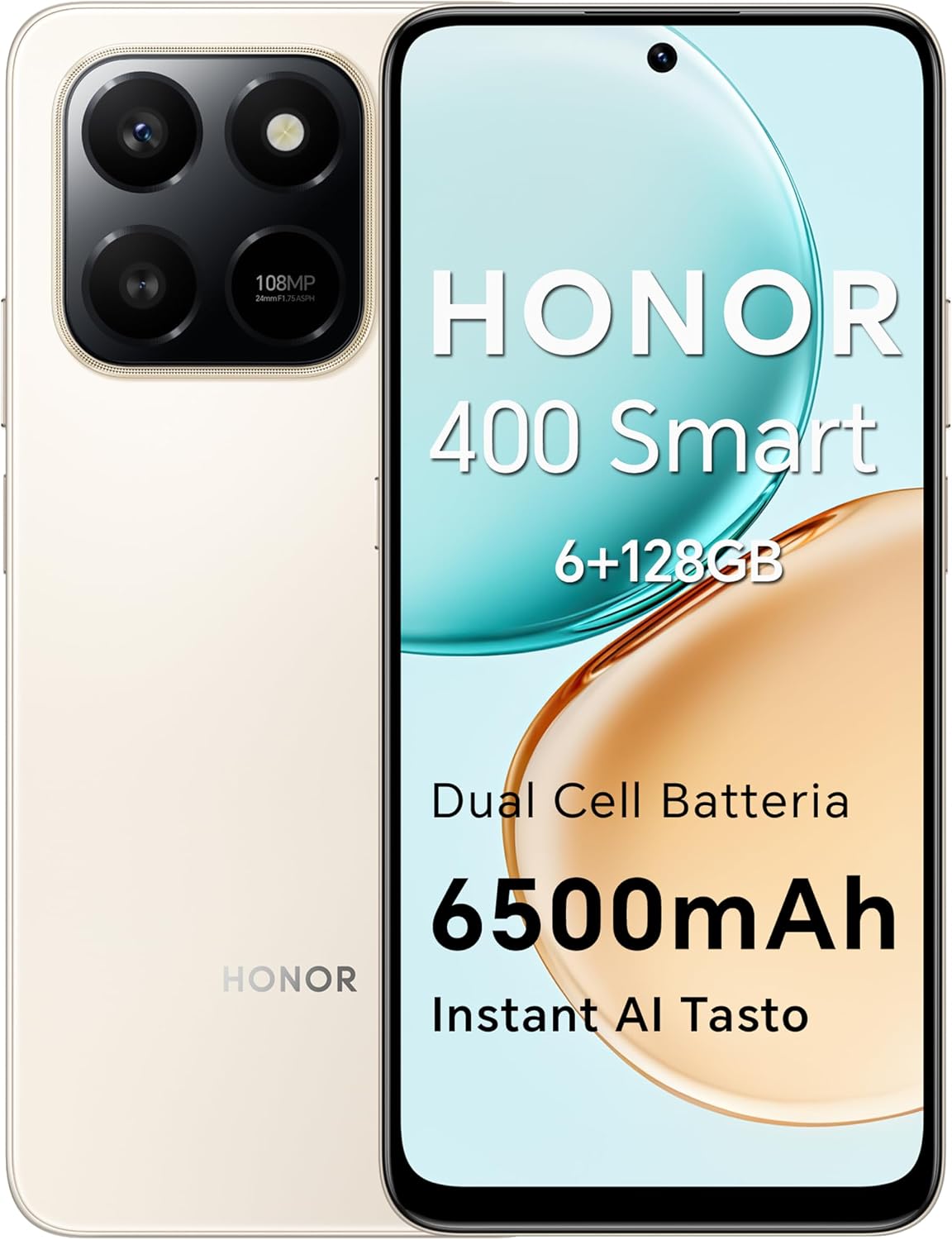
The most balanced mid-range compromise, with long-lasting software support:

The reference point for anyone who wants a spec sheet with no compromises, without reaching the most extreme prices:

Conclusion
There’s no single formula: the right choice comes from the intersection of your budget and the two or three features you’re not willing to compromise on. Anyone who shoots a lot of photos should spend more on that front even at the expense of something else; anyone working from their phone should focus on software support and productivity; anyone who games should focus on cooling, display, and battery. Use these criteria as a checklist before every purchase, regardless of your budget.