Good mobile gaming depends on more than just the chip: cooling, display refresh rate, RAM to keep apps in memory, and — just as important — battery life so you don’t have to hunt for an outlet mid-match. We compared five smartphones covering different approaches: one dedicated gaming phone and four generalist flagships that, chip specs in hand, hold their own just as well.
REDMAGIC 11S Pro: the dedicated gaming phone
If you want a phone built from the ground up for gaming, the REDMAGIC 11S Pro starts with a Snapdragon 8 Elite Gen 5 chip paired with a second dedicated chip, the RedCore R4, which optimizes frame rate and touch responsiveness while playing. Its real strength, though, is the AquaCore cooling system, with an extended vapor chamber and an internal fan spinning up to 24,000 rpm — a solution no generalist flagship offers. The 6.85” AMOLED display at 144Hz is also free of any notch or hole-punch, with the front camera placed under the panel so it never interrupts the view while gaming. The trade-off is a loud design, not ideal if you prefer a more understated phone for daily use.

POCO F8 Pro: the best value for money
The POCO F8 Pro packs the same Snapdragon 8 Elite found in pricier flagships, paired with a true 12-bit RGB matrix display that, in our assessment, is among the best in its class for smoothness and color quality. The symmetrical dual Sound by Bose speakers make the audio experience particularly immersive while gaming. It’s the most sensible option for anyone who wants flagship-level performance without paying flagship prices, in exchange for software with a few too many preinstalled apps.

OPPO Find X9 Ultra: more RAM so you never slow down
The OPPO Find X9 Ultra brings up to 16 GB of RAM, handy for keeping more apps open in the background without having to reload everything between sessions. The Snapdragon 8 Elite chip and the 5500 mAh battery with 100W wired / 50W wireless charging round out a package built for anyone who games for long stretches without wanting to give up a Hasselblad-grade camera system for the rest of the day.

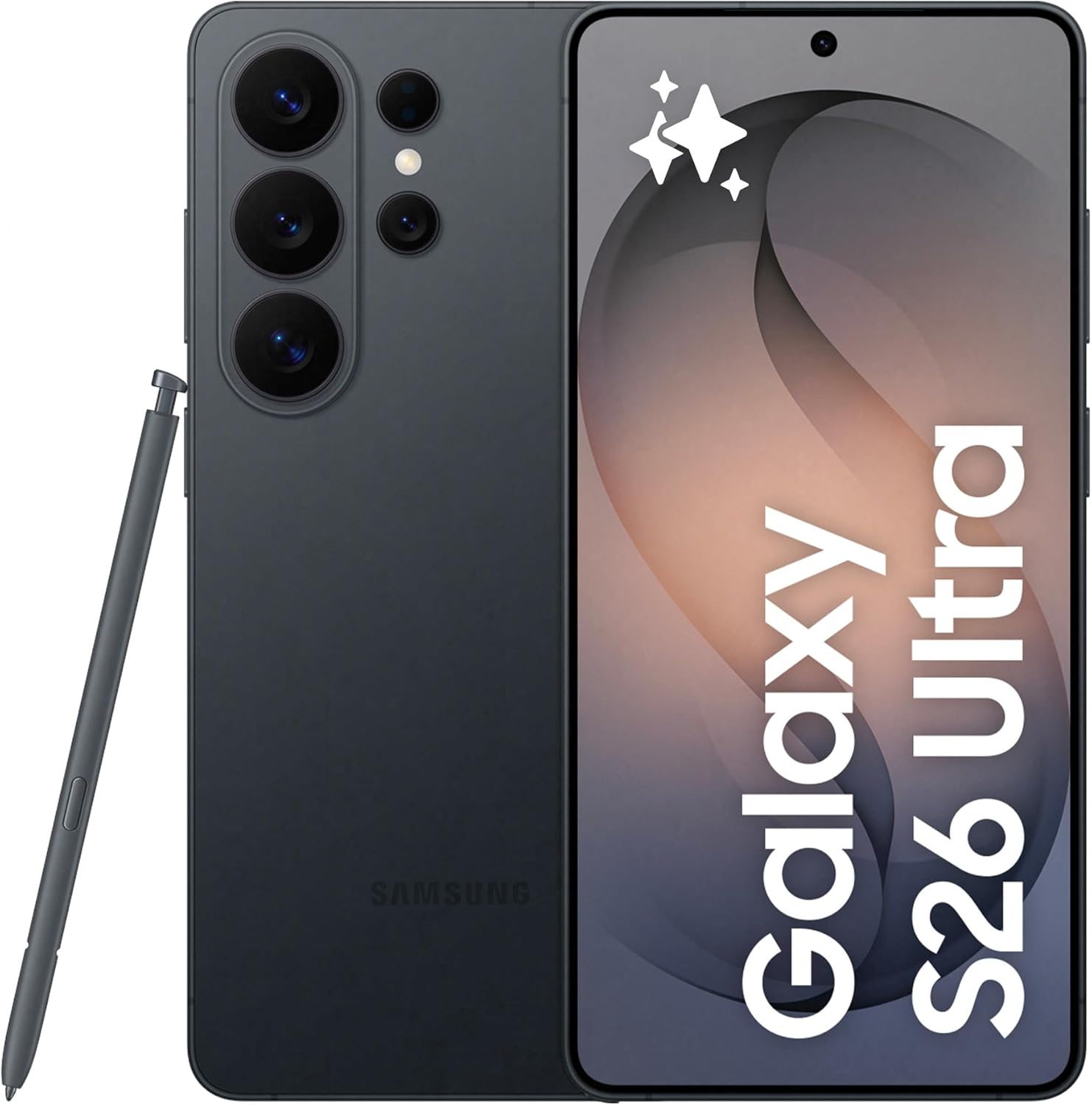
Samsung Galaxy S26 Ultra: the most complete choice
The Galaxy S26 Ultra isn’t a gaming phone and doesn’t pretend to be one, but its flagship chip and extra RAM for processing still make it very solid for gaming, with the added benefit of one of the most mature software ecosystems on Android and a display with an exclusive privacy feature. It’s the choice for anyone who wants a single phone that does everything well, gaming included, without the aesthetic trade-off of a dedicated gaming phone.
vivo X300 Pro: the most powerful Android chip of the group
The vivo X300 Pro packs the MediaTek Dimensity 9500 at 3nm, one of the most powerful Android chips currently available, paired with 16 GB of RAM and UFS 4.1 storage up to 512 GB — a combination that translates into fast load times and zero slowdowns even in the most demanding titles. The LTPO AMOLED display at 2000 nits peak brightness is among the very best out there. The one trade-off: in the European version, battery capacity drops to 5440 mAh versus the 6510 mAh of the Chinese variant.

Bottom line
There’s no single “best” for gaming — it depends on how much you care about a gaming-dedicated look. Anyone wanting maximum cooling and an uncompromising design should pick the REDMAGIC 11S Pro; anyone after the best value for money should go with the POCO F8 Pro; anyone unwilling to sacrifice a top-tier camera system for the rest of the day should look at the OPPO Find X9 Ultra, Samsung Galaxy S26 Ultra, or vivo X300 Pro, all three of which are perfectly capable of handling any current mobile title.