Not everyone chasing flagship-level performance wants — or can afford — to spend over 1,000 euros. That’s why we compared seven mid-range smartphones that, in many respects, manage to keep pace with much pricier models: iPhone 17e, Google Pixel 10 and Pixel 10A, OPPO Reno 15 Pro, vivo V70, Nothing Phone (4a) Pro, and POCO F8 Pro. None of them is perfect, but each one excels in at least one specific area.
The seven models at a glance
iPhone 17e — the most compact and the most powerful for on-device AI tasks, with Face ID and anti-reflective glass, but stuck at 60 Hz.

Google Pixel 10 — the most well-rounded choice between hardware and software, with some of the best haptics of the group, but only two rear cameras.

Google Pixel 10A — the same polished software as the Pixel 10 at a price similar to the other six, though the standard Pixel 10 remains the more rational pick.

OPPO Reno 15 Pro — the most complete camera system, the only one with a 50 MP ultra-wide alongside a telephoto lens.

vivo V70 — the best telephoto lens of the bunch and battery life that, by our estimate, can reach 3-4 days.

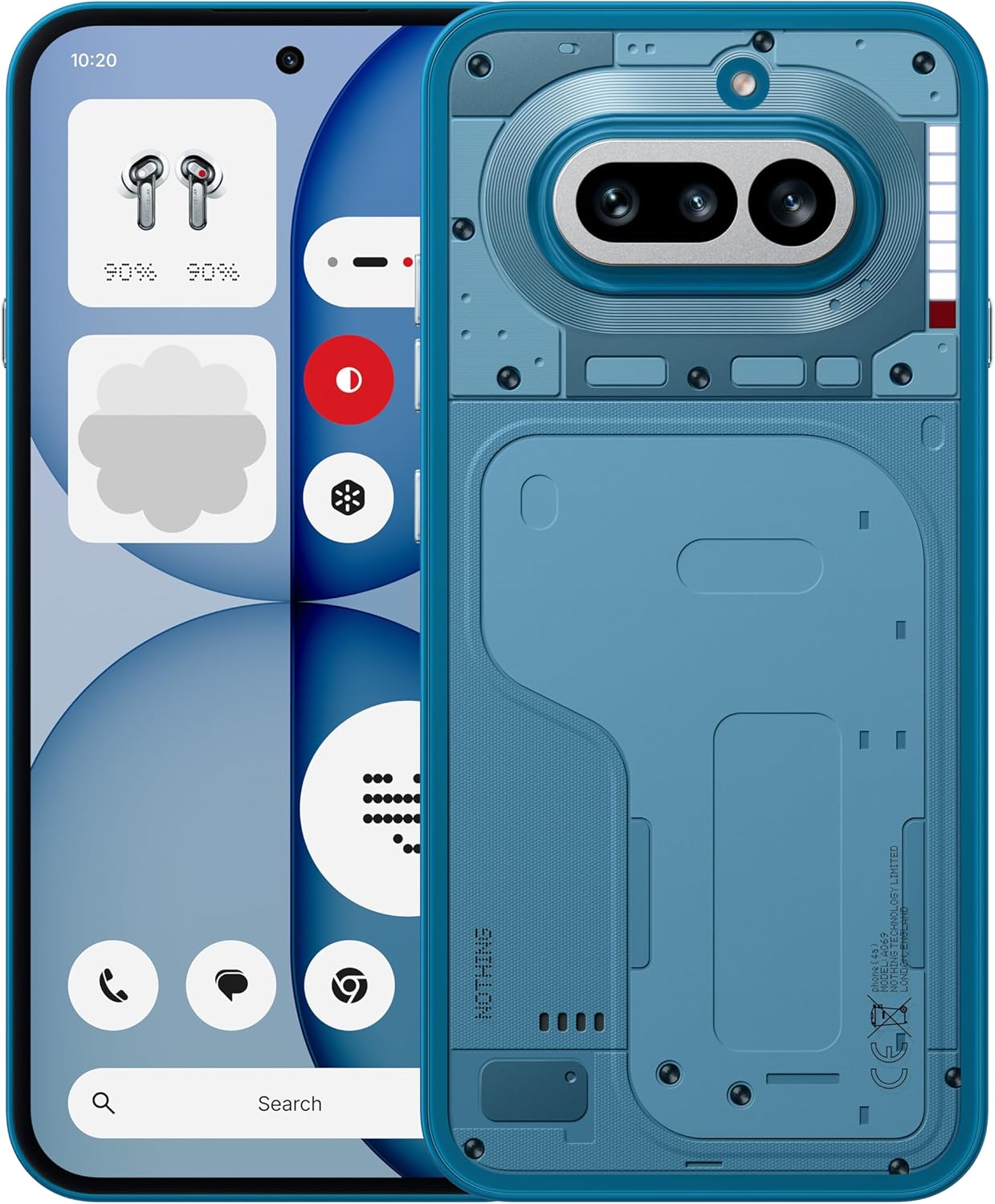
Nothing Phone (4a) Pro — the most original design, an all-aluminum body and rear Glyph Bar, held back by its IP65 rating.
POCO F8 Pro — the best display in the comparison, undermined by software full of ads and bloatware.

Design and build
Anyone looking for a compact phone will gravitate toward the iPhone 17e, the smallest and lightest of the group, or the Pixel 10A. The OPPO Reno 15 Pro has shrunk compared to its predecessor while boosting specs, landing somewhere between the two. The vivo V70 is arguably the most elegant and understated, with Schott glass (the same German sub-brand used in professional camera optics) making it very durable. The Nothing Phone (4a) Pro is the biggest and most distinctive: the only one with a fully aluminum unibody and an LED rear panel (the Glyph Bar) that can display notifications or custom information. The POCO F8 Pro, for its part, echoes the iPhone’s look, with a top section housing a symmetric dual-speaker setup tuned by Bose.
Display
The clearest verdict goes to the POCO F8 Pro: it packs a panel with a genuine RGB matrix at 12-bit depth and extremely thin bezels — a level of quality normally found on 1,500-euro phones. The vivo V70 follows, among the brightest of the bunch and highly customizable, with the OPPO Reno 15 Pro close behind (more compact, but slightly less bright). The Nothing Phone (4a) Pro has a decent 144 Hz panel but doesn’t match the others on brightness, while the iPhone 17e pays the price of being the only one stuck at 60 Hz — noticeable in 2026, especially when scrolling.
Cameras
Four out of seven models really compete here. The OPPO Reno 15 Pro has the most complete system, thanks to a 50 MP ultra-wide that no other competitor offers. The vivo V70 has the best telephoto lens overall, with a sensor nearly on par with the main one. The Nothing Phone (4a) Pro offers a periscope optical zoom, but it’s a step down from the previous-generation Pro model, and its 8 MP ultra-wide is the weak point. The iPhone 17e has only a single rear camera, while the Pixel makes do with a dual-camera setup where the ultra-wide is little more than a token addition. For selfies, iPhone and Pixel remain a notch above the rest.
Performance and AI
In on-device AI tests and 4K HDR video export, the iPhone 17e leaves everyone else far behind thanks to its A19 chip. The POCO F8 Pro comes in second, confirming very high-end hardware. The OPPO Reno 15 Pro is a pleasant surprise, managing to perform almost like a flagship in video export despite its MediaTek chip. The Nothing Phone (4a) Pro, held back by the need to avoid overheating its metal body, finishes last.
Battery life and charging
The vivo V70 wins clearly here, with a battery that can reach up to 6500 mAh and an estimated battery life of 3-4 days under light use. The iPhone 17e, despite a smaller battery, leverages a very efficient modem to get close to two days of use, and is — along with the Pixel — the only one with wireless charging (with MagSafe support). OPPO and POCO lack wireless charging but make up for it with wired charging times under an hour. The Nothing Phone (4a) Pro, with the smallest battery of the group and only 50W wired charging, is the weakest on this front.
Software
This is where the paths diverge sharply. Google Pixel (in both variants) and the Nothing Phone offer the cleanest experience, with very little unnecessary preinstalled software. The OPPO Reno 15 Pro holds its own with ColorOS, though there are a few annoyances like wallpapers set without consent. The real sore point of the comparison is the POCO F8 Pro: despite near-perfect hardware, its software is full of ads, third-party apps demanding excessive permissions, and preinstalled apps that are hard to remove — a trade-off worth weighing before buying.
Conclusion
There’s no outright winner among these seven smartphones, but each has a clear profile: the iPhone 17e for anyone who wants maximum power in a compact form factor with iOS; the Google Pixel 10 for the most balanced Android experience; the OPPO Reno 15 Pro for the most versatile camera system; the vivo V70 for battery life and telephoto performance; the Nothing Phone (4a) Pro for anyone who wants to stand out; the POCO F8 Pro for anyone who prioritizes hardware above all and is willing to “clean up” the software. The Pixel 10A remains a good choice only if the standard Pixel 10 isn’t available at the same price.